
Every time I open Instagram or Pinterest lately, someone’s showing off a bathroom that looks like it was poured from a single piece of stone. Inevitably, the comments are full of people asking the same things: “What is micro cement (how can we get it, how to apply it, is it waterproof…)?”
Microcement has become one of those terms that everyone uses, but nobody quite agrees on. Kind of like Kleenex. Kleenex is actually a brand, but you know how we all say “hand me a Kleenex” when we really just mean tissue. Micro cement has turned into the same thing. It’s a buzzword, a catch-all for any smooth cement-look finish (whether it’s technically microcement or not).
And you know what? I see no reason to correct you. If you’re searching for microcement because you want that gorgeous contemporary look in your home, let’s get you there.
So what is microcement made of?
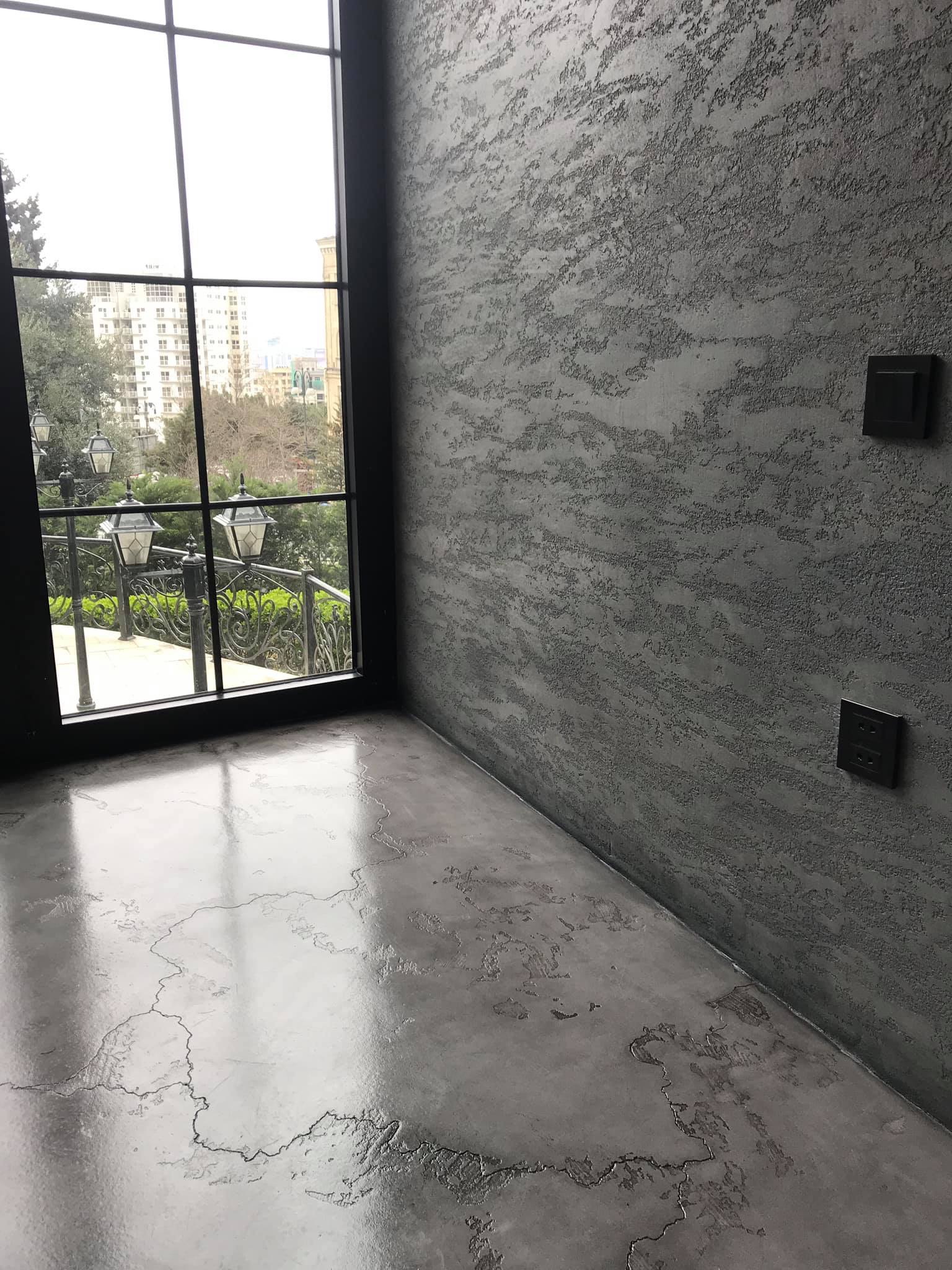
The traditional stuff is a polymer-modified cement; basically, cement mixed with fine aggregates added for flexibility or to fine-tune the color. You will find it mostly in interior floors and walls.
People love microcement for open-plan spaces because there’s nothing breaking up the visual flow, but that is not its only advantage. Microcement is more affordable than natural stone; it goes right over existing surfaces, so you’re not ripping out your old tile. Plus it gives that modern matte finish that photographs so well.
But I have to be straight with you, because that’s what we do. Traditional microcement also has some limitations. It needs regular sealing, for one thing; skip that maintenance, and you’ll see wear pretty quickly. It’s not great with chemicals or heat. And while people do use it in bathrooms, it’s really designed for interior applications. Taking it outside or into a shower makes things somewhat tricky.
This is exactly why we developed the Romabio Unico Plaster System, an all-in-one waterproof system.
“I am you, but better”
Plain micro cement is not really waterproof; the traditional stuff needs sealers and still isn’t recommended for heavy wet areas. Romabio Unico Plaster System on the other hand, is inherently water-resistant through every step. You get that same aesthetic (matte, satin, glossy, you choose) with the durability to actually back it up.
I get excited about this because it solves many problems at once. Our Unico Plasters are genuinely low-maintenance, and they don’t yellow over time. It’s certified A+ for low emissions, which matters if you care about what you’re breathing inside your own home. And it lasts—we’re talking floors, walls, stairs, bathrooms, showers, the works.
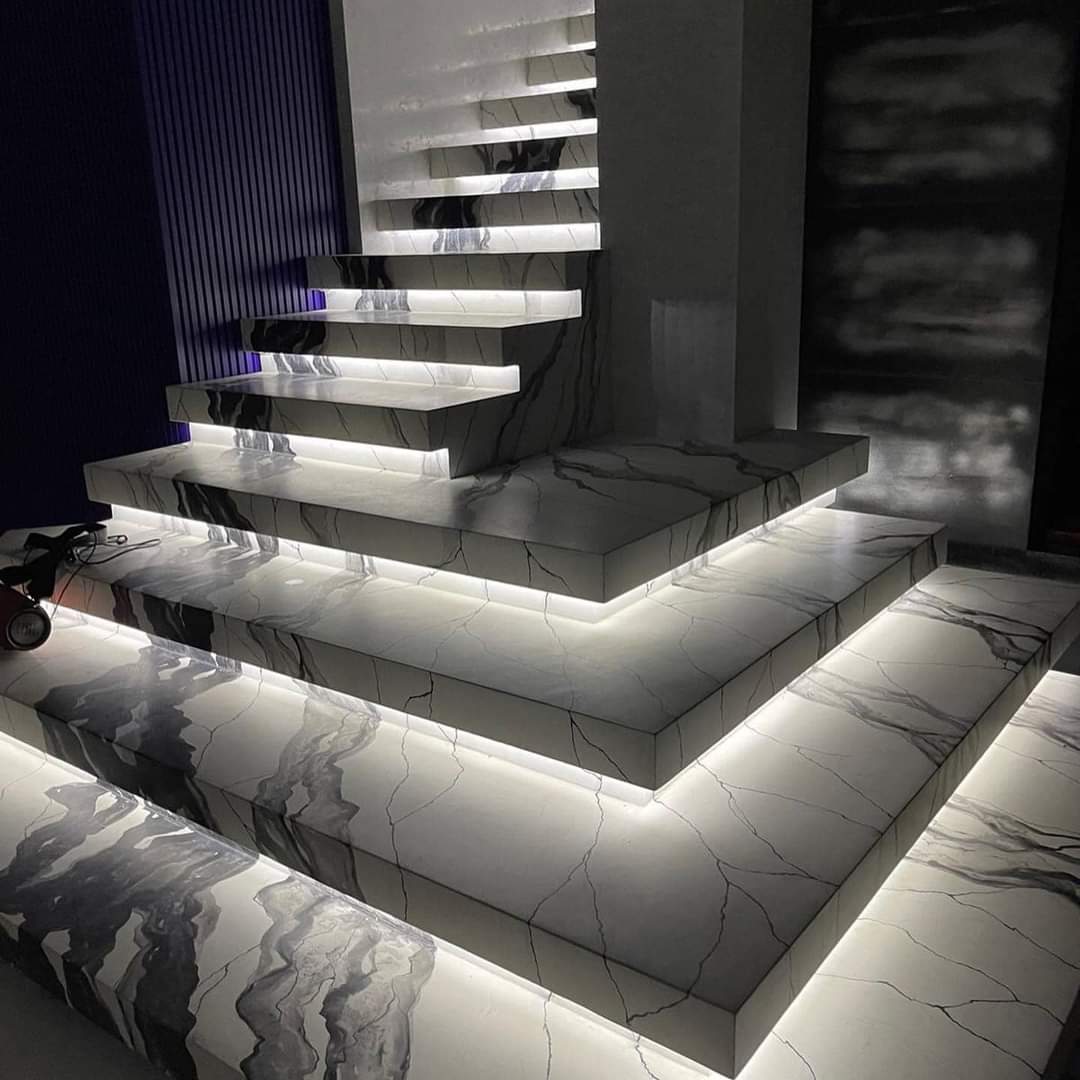
The upfront investment is higher; and you’ll definitely need a professional to apply it (which we can help!). But if you factor in the longevity and the fact that you’re not on a regular sealing schedule, the math changes. Just fill out our Hire a Pro form and we’ll connect you with trusted pros in your area who can get the job done right.
But wait, what about Tadelakt?
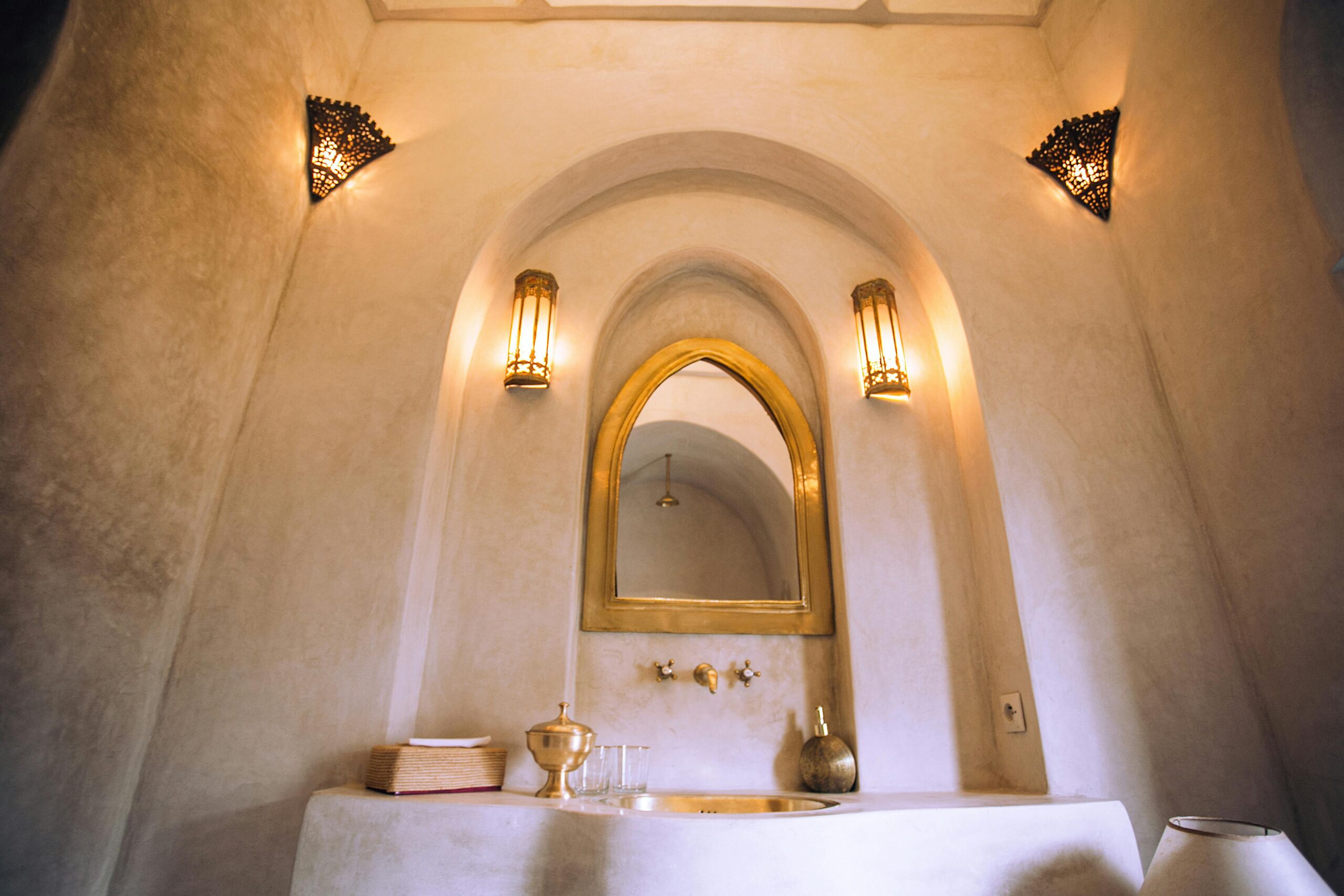
Tadelakt is gorgeous. It’s ancient Moroccan plasterwork, polished with river stones and sealed with olive oil soap. The finish is silky, slightly luminous. Every surface done in authentic Tadelakt is genuinely one of a kind, because it’s hand-made by artisans who’ve trained in the craft.
It’s waterproof too, which is why you see it in hammams and luxury bathrooms. Of course, there’s always a trade-off: Tadelakt is delicate. It needs constant care, and if it’s not applied by someone who really knows what they’re doing, it won’t hold up.
So, which one is right for you?
Go with Microcement if you want that modern, industrial aesthetic on a reasonable budget and you don’t mind staying on top of regular sealing.
Go with Romabio Unico Plaster System if you want the seamless look with serious durability and you’d rather skip the maintenance headaches.
Go with Tadelakt if you’re drawn to tradition, you love the idea of a handcrafted finish with history behind it, and you’re ready to treat it with the care it deserves.
Ready to get started? Hire a Romabio PRO near you. Questions? Our customer service team is always available to help at info@romabio.com.





 Photo Credit: Caldwell House, TN