
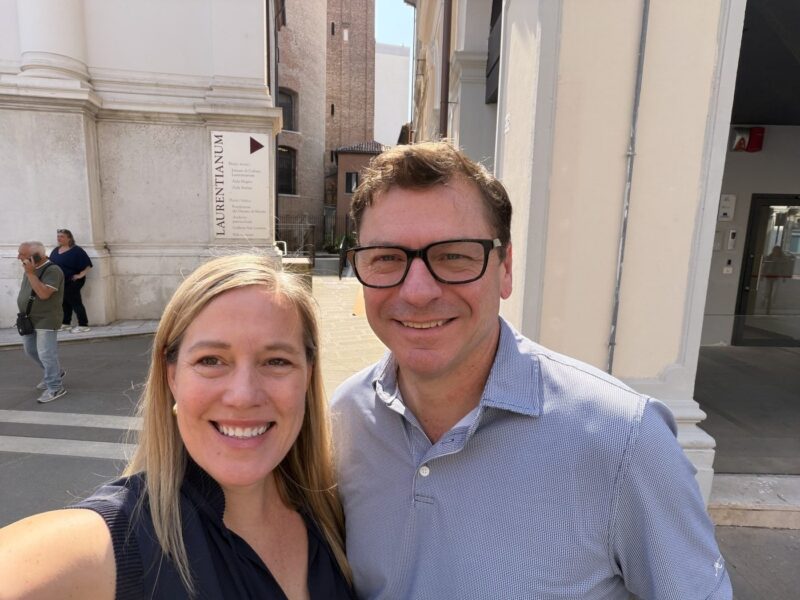
A week in Florence and Venice, reconnecting with the colors, materials, people and centuries-old limewash finishes that continue to inspire Romabio.
Michael and I love Italy. It’s where our paint comes from — and every time we go back, we remember why. It had been four years since I’d been. Not because I didn’t want to go, but running a house with three kids turns out to be its own full-time job 😊. Michael and Matt Hocutt make the trip once or twice a year to spend time with our partners and see what’s new. But me? I’d been waiting.
About eight years ago, I wrote a blog about our first real trip through Italy with our family — the towns, the restaurants, the people. I still send that post to friends and customers who are planning their own trip, because the recommendations still hold up. Some places just don’t lose their magic.
This time, it was a shorter trip — one week, June, just the three of us: Michael, Matt, and me. Quick doesn’t mean small, though. We still managed to eat impossibly well, get inspired at every turn, and come home with a long list of things I can’t stop thinking about. Here’s where we went.
Florence: magic, with a heat warning
Florence sits in a valley — almost a bowl — which means the heat rolls in and just stays there. We went in June because it was the only window that worked around the kids’ camp schedules, and between that and a heat wave moving across Europe that summer, it was hot. Genuinely, sit-still-and-sweat hot.
I say that not to talk anyone out of Florence — I recommend it to everyone, and I always will — but because I think it’s worth knowing before you go. Florence runs to extremes: brutal summers, cold winters. Plan around it if you can.
The Coast: seafood, partners, and a town worth a return trip
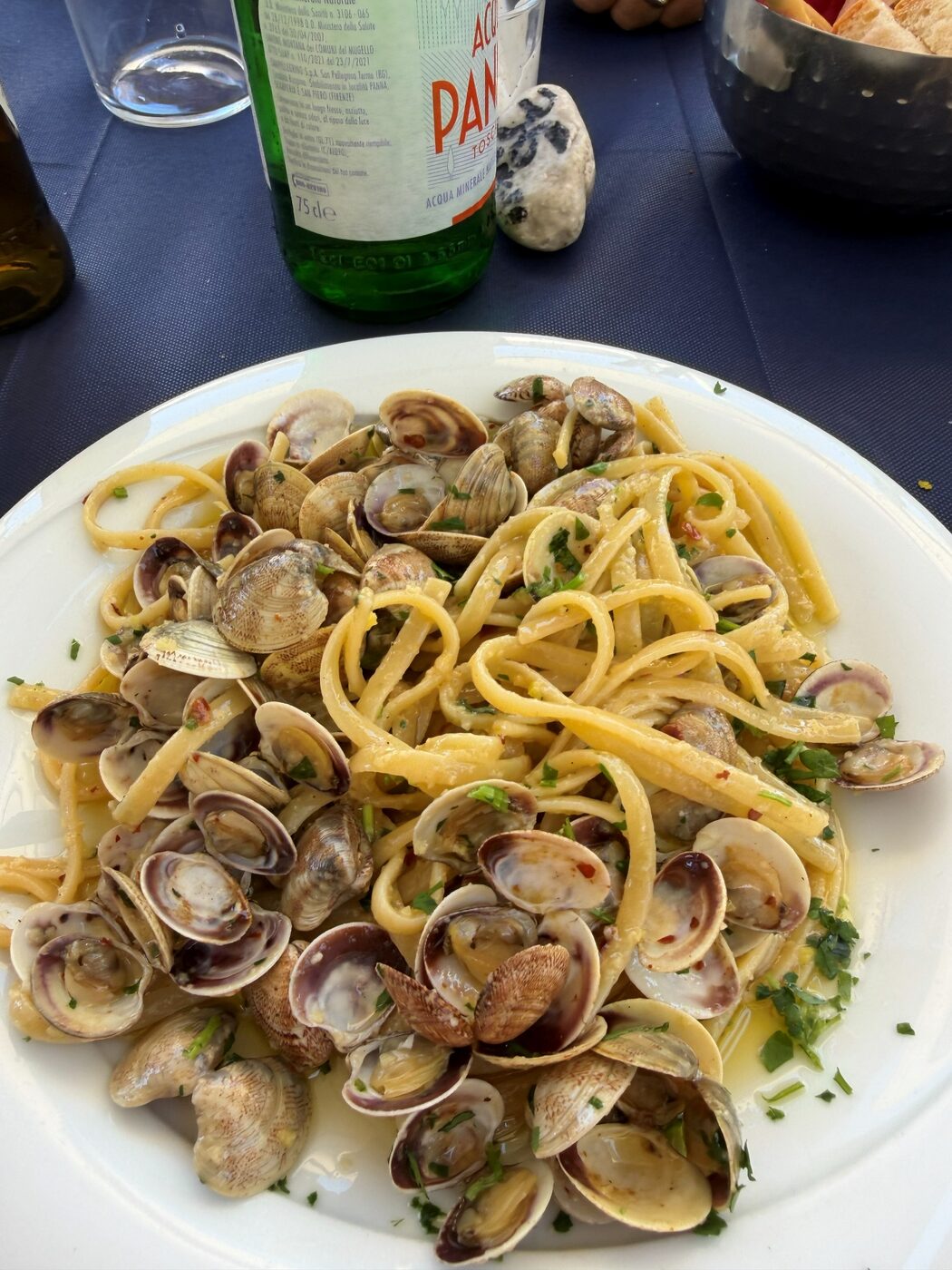
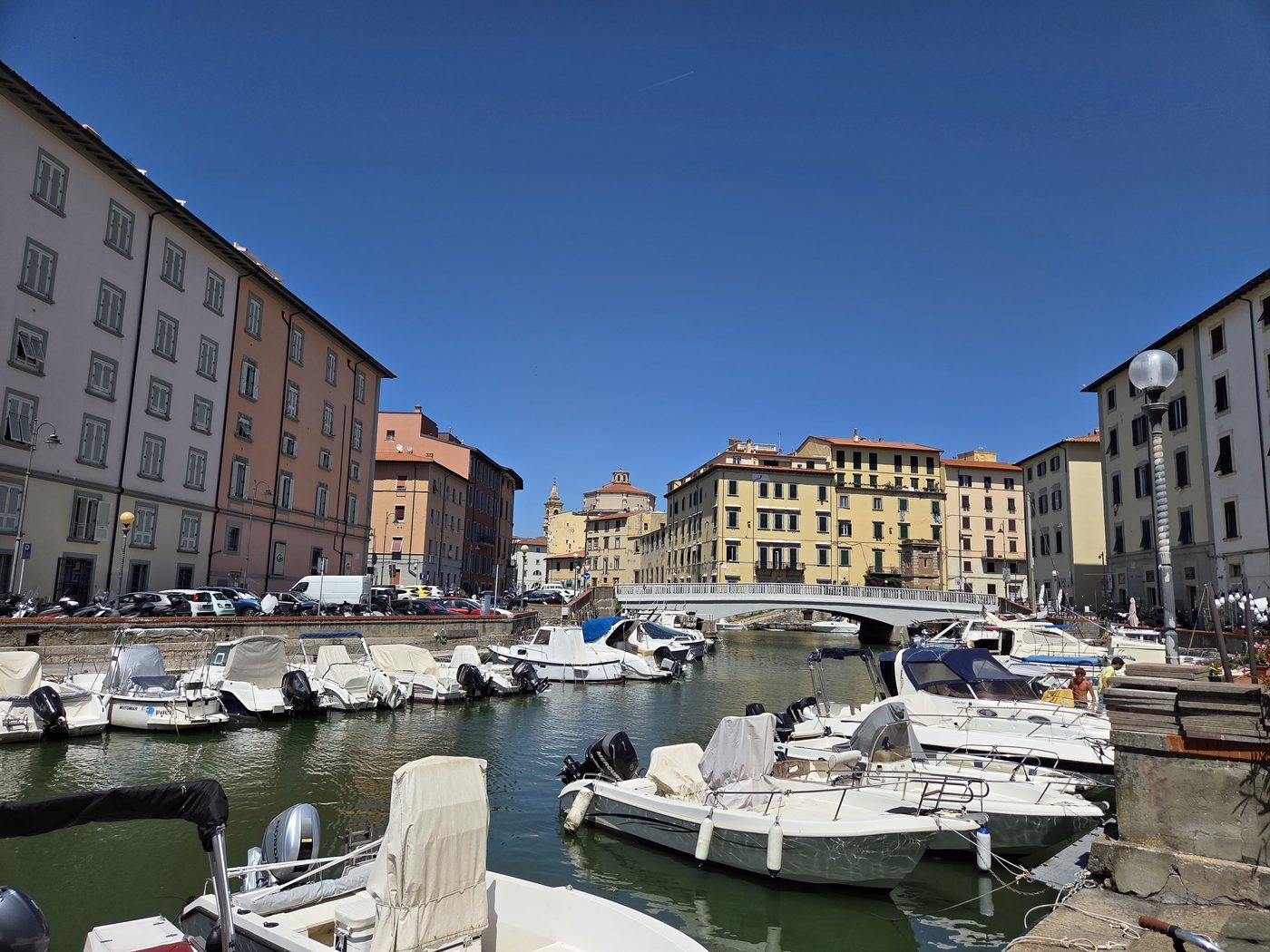
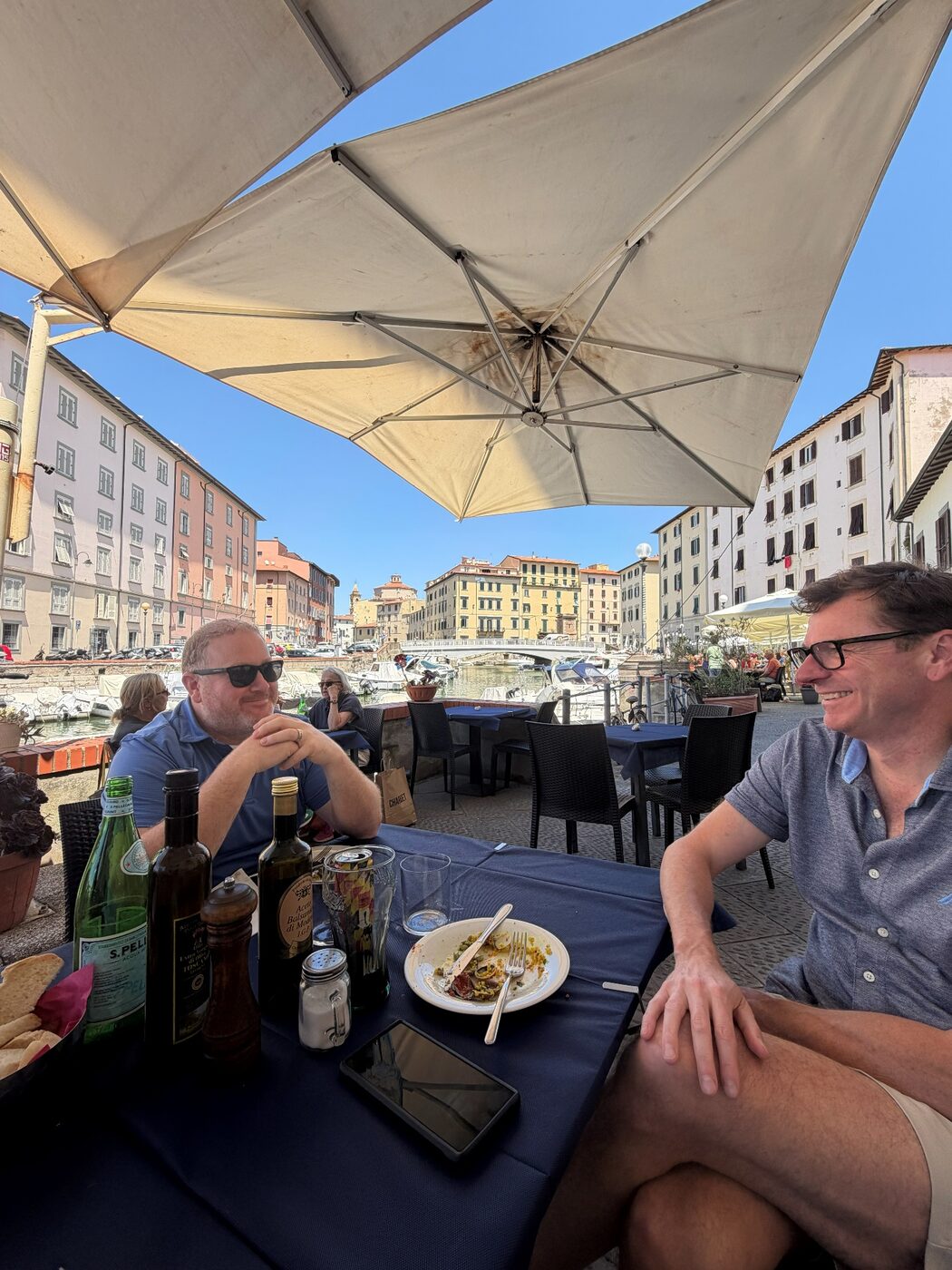
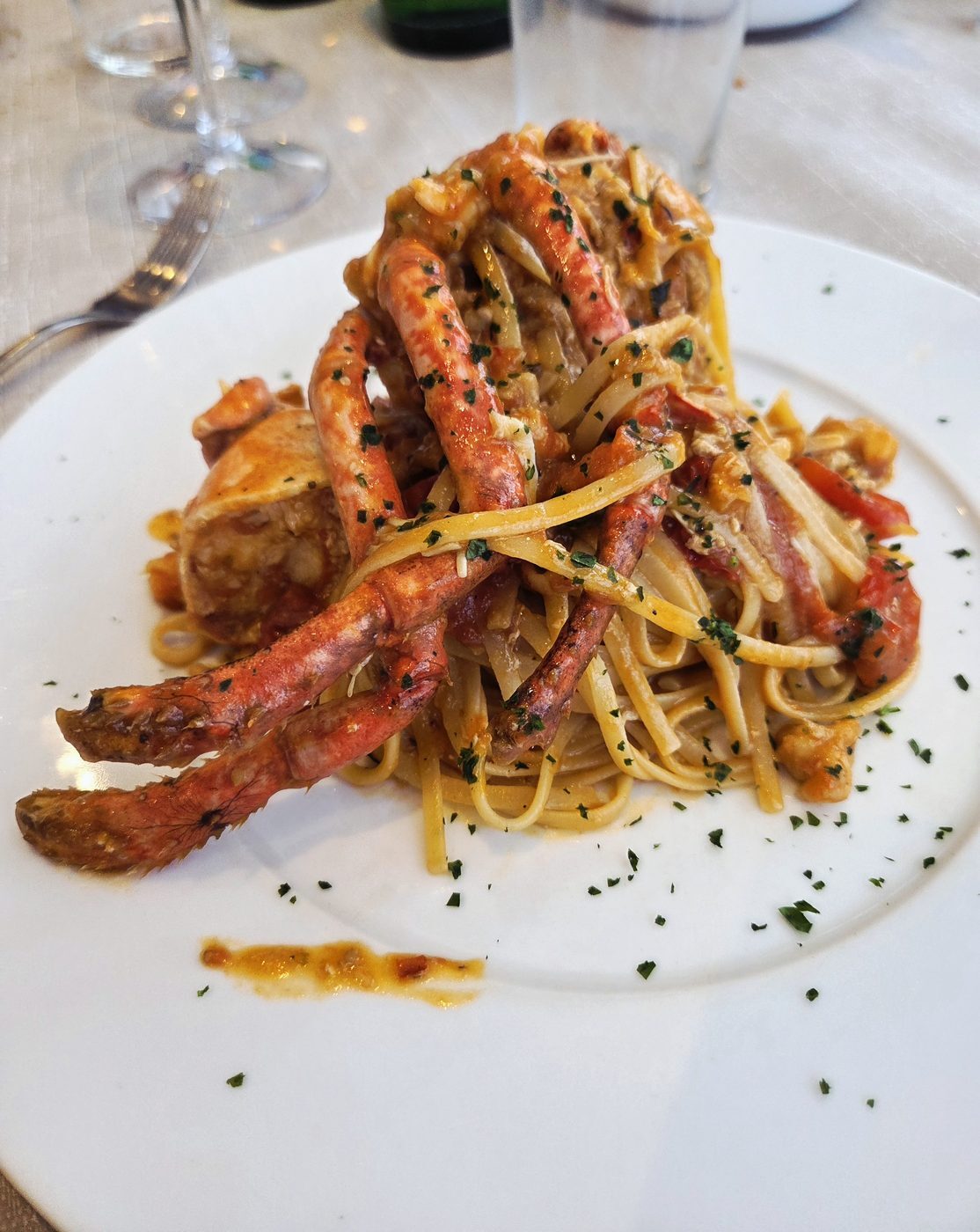
From Florence we drove to the West coast to meet with some of our partners, and we ate at L’Ancora , a small seafood spot in Livorno that was one of the best meals of the whole trip. Course after course of seafood, done simply and perfectly. We didn’t stay overnight, so I can’t point you to a hotel — but if you’re ever in the area, don’t skip it.
A Farmhouse, Old Friends, and Wild Boar Pasta
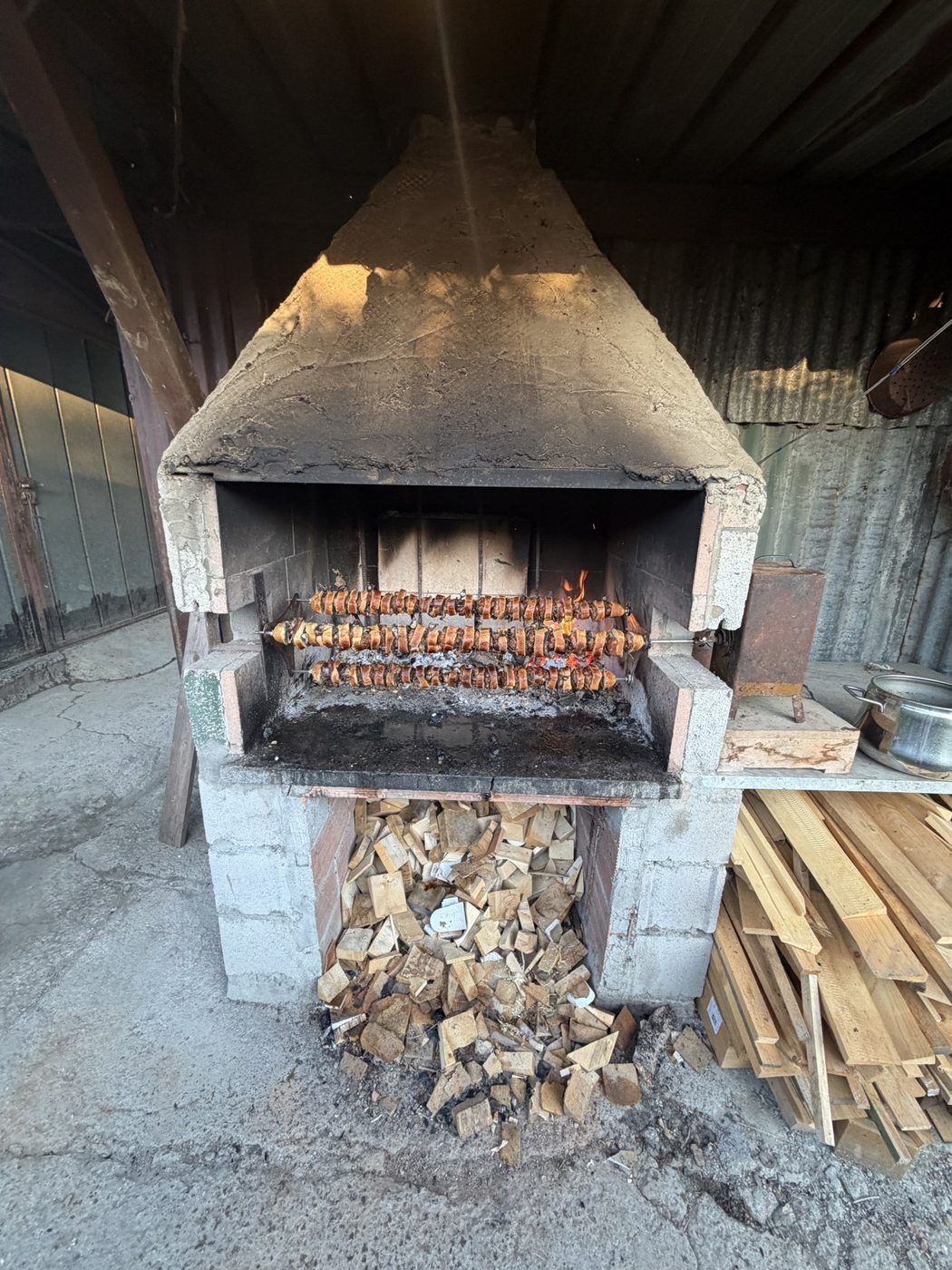
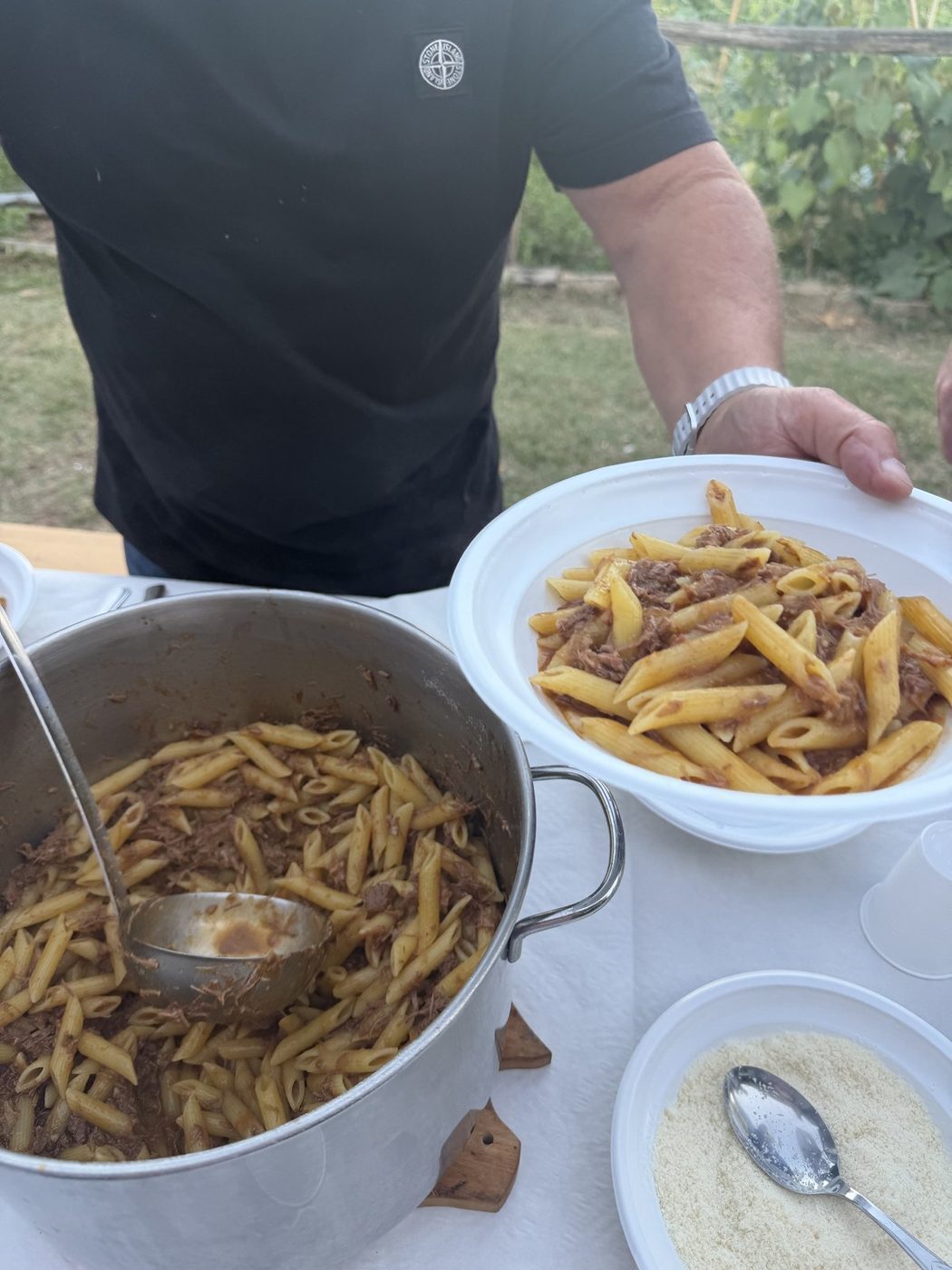
Back near Florence, after work we went to a farmhouse of friends of ours. They spent the entire day cooking: wild boar pasta, and pork roasted for hours on a spit over an open fire, using a family recipe that’s been passed down for generations in that same little farmhouse.
There’s no restaurant that replicates that. It’s not on any list. It’s just what happens when locals take care of you, the way their family has fed people for decades. We were so grateful.
Venice: pizza, meetings, and the espresso that saves you
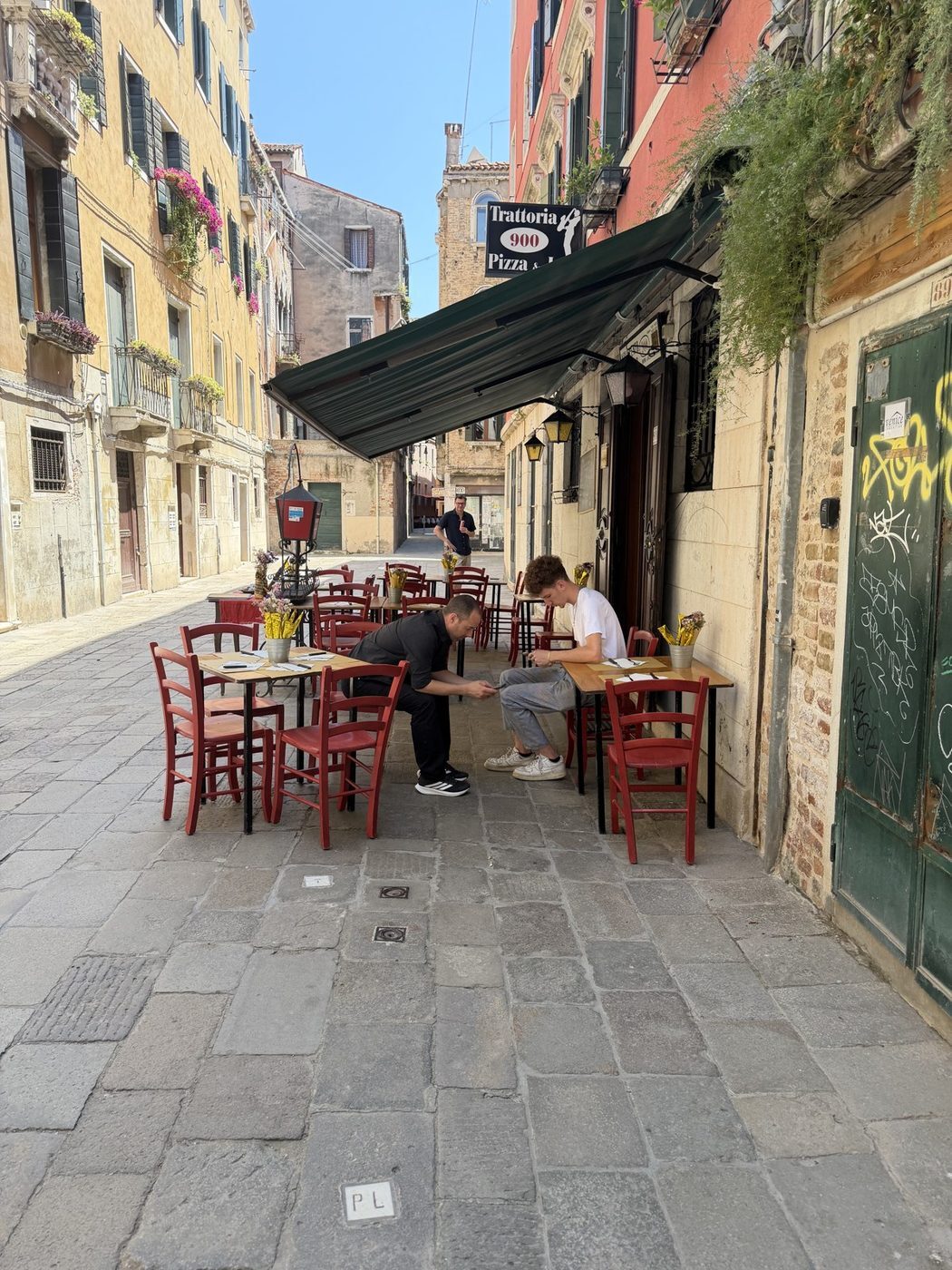
From there, on to Venice and it is still as wonderful and just as impossible not to fall for.
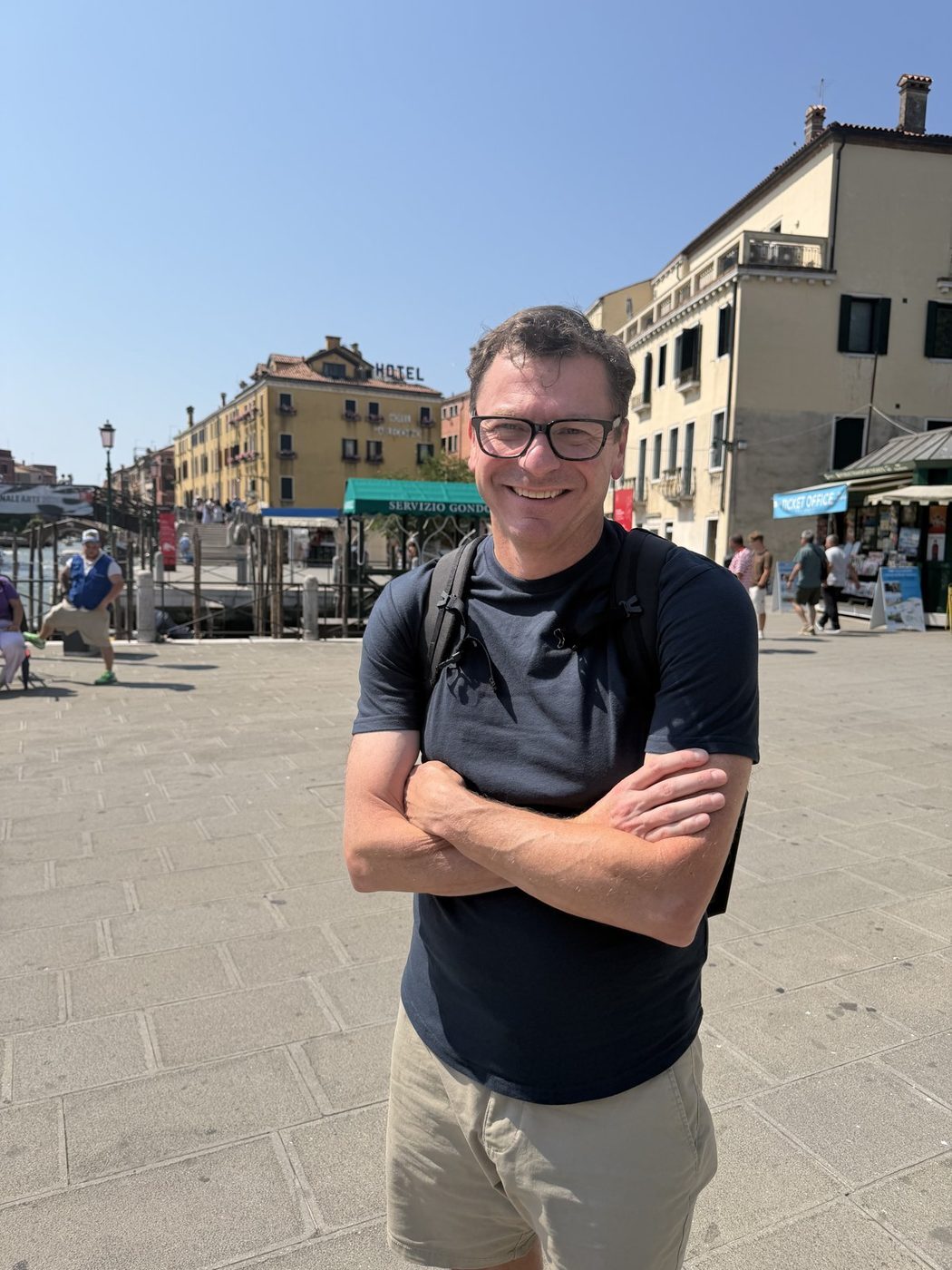
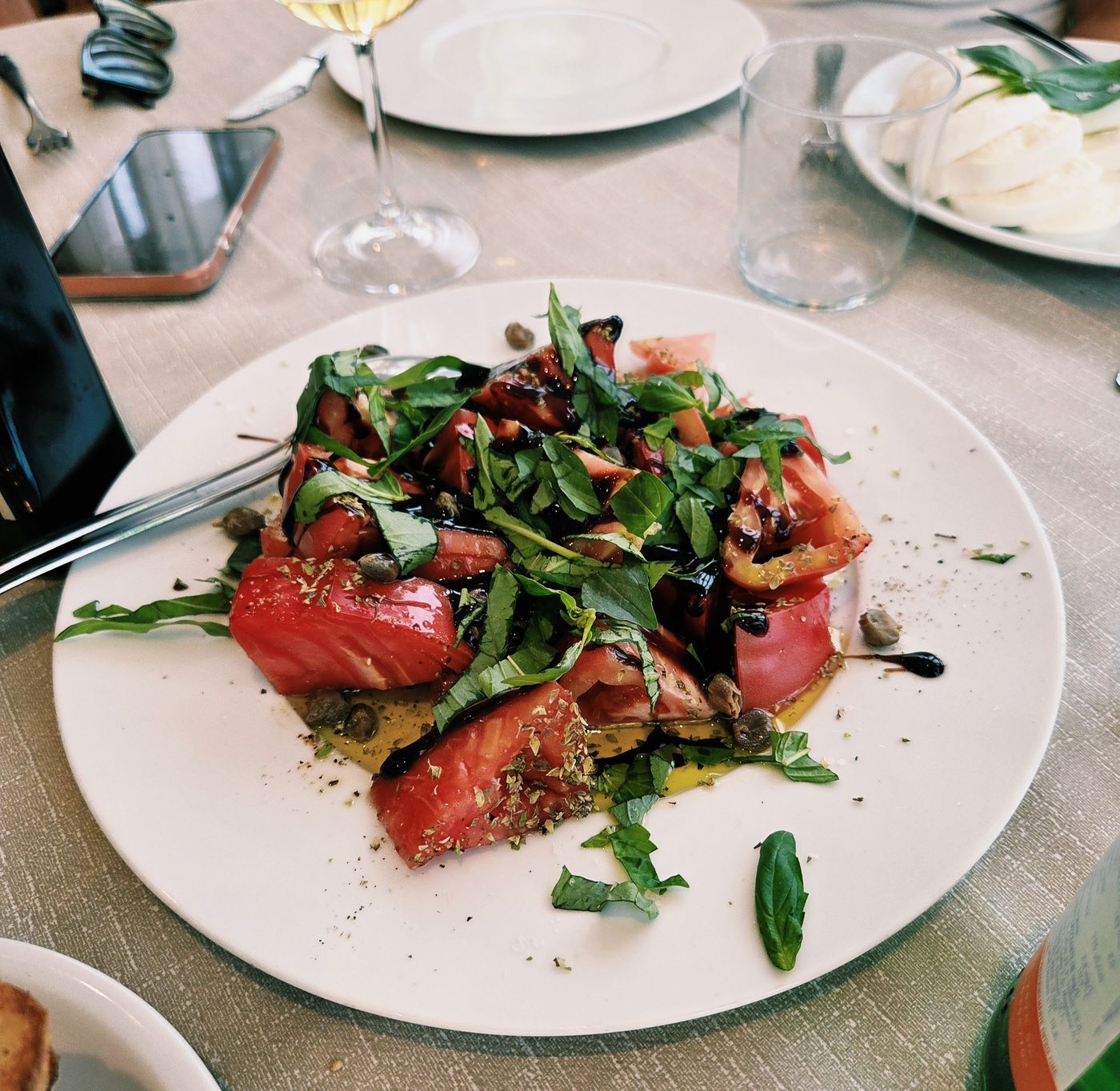
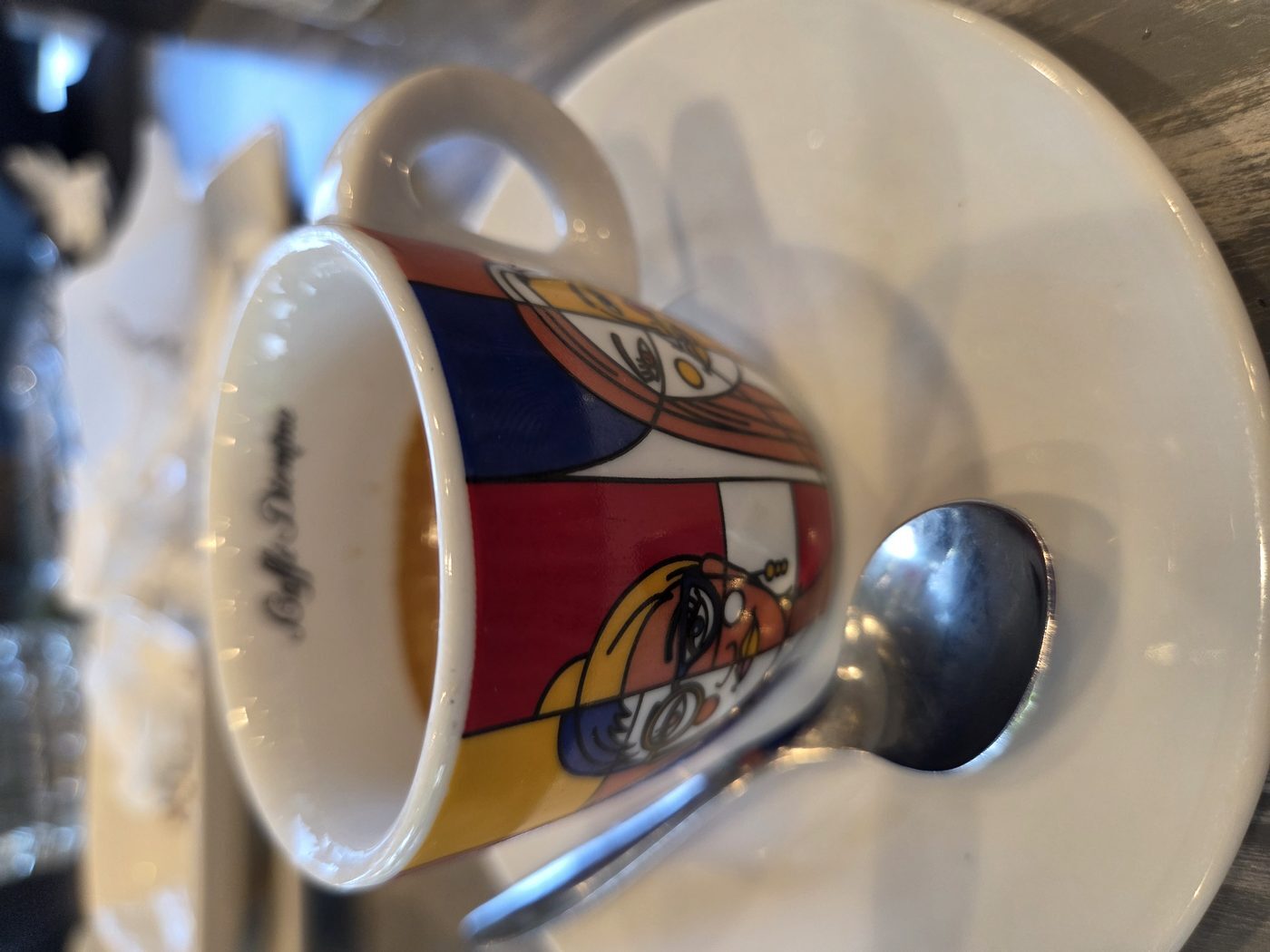
One afternoon we ate at Matt’s favorite place, Pizzeria Chiccherichi, where the tomatoes and the mozzarella are practically the size of your hand and always more pasta and seafood. We rolled out of there full, which made for an interesting afternoon of meetings. Thank God for Italian espresso — you need it after a lunch like that.
An Evening Near Venice, and the Story Behind the Colors
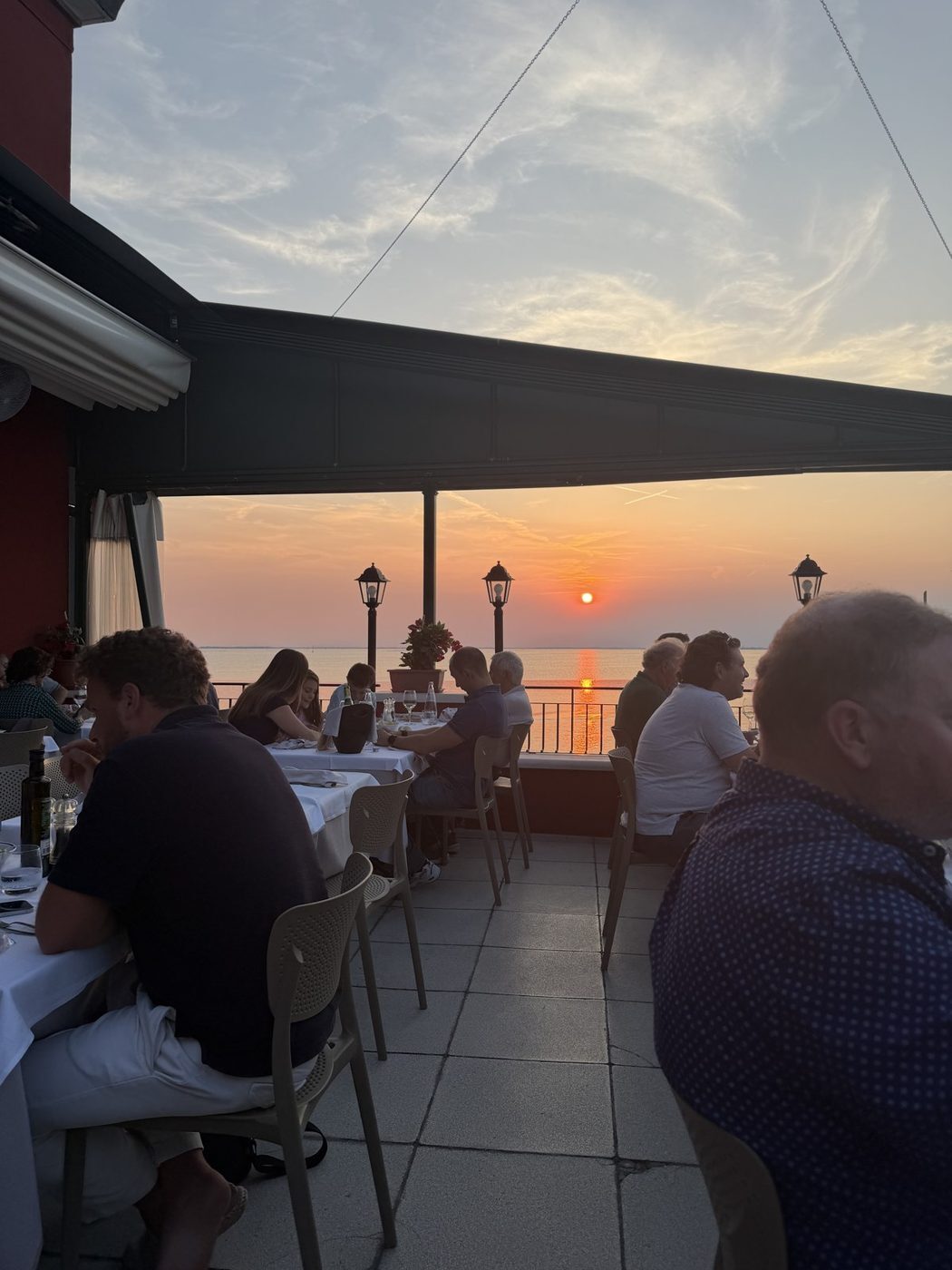
On our last day, a Friday, we spent the evening at a partner dinner Ristorante Da Nane in the little island of San Pietro in Volta : on the mainland just outside Venice. Patrizio Betti, a Florentine, and a third-generation paint manufacturer who is our master formulator came along with Michael, Matt, and me.
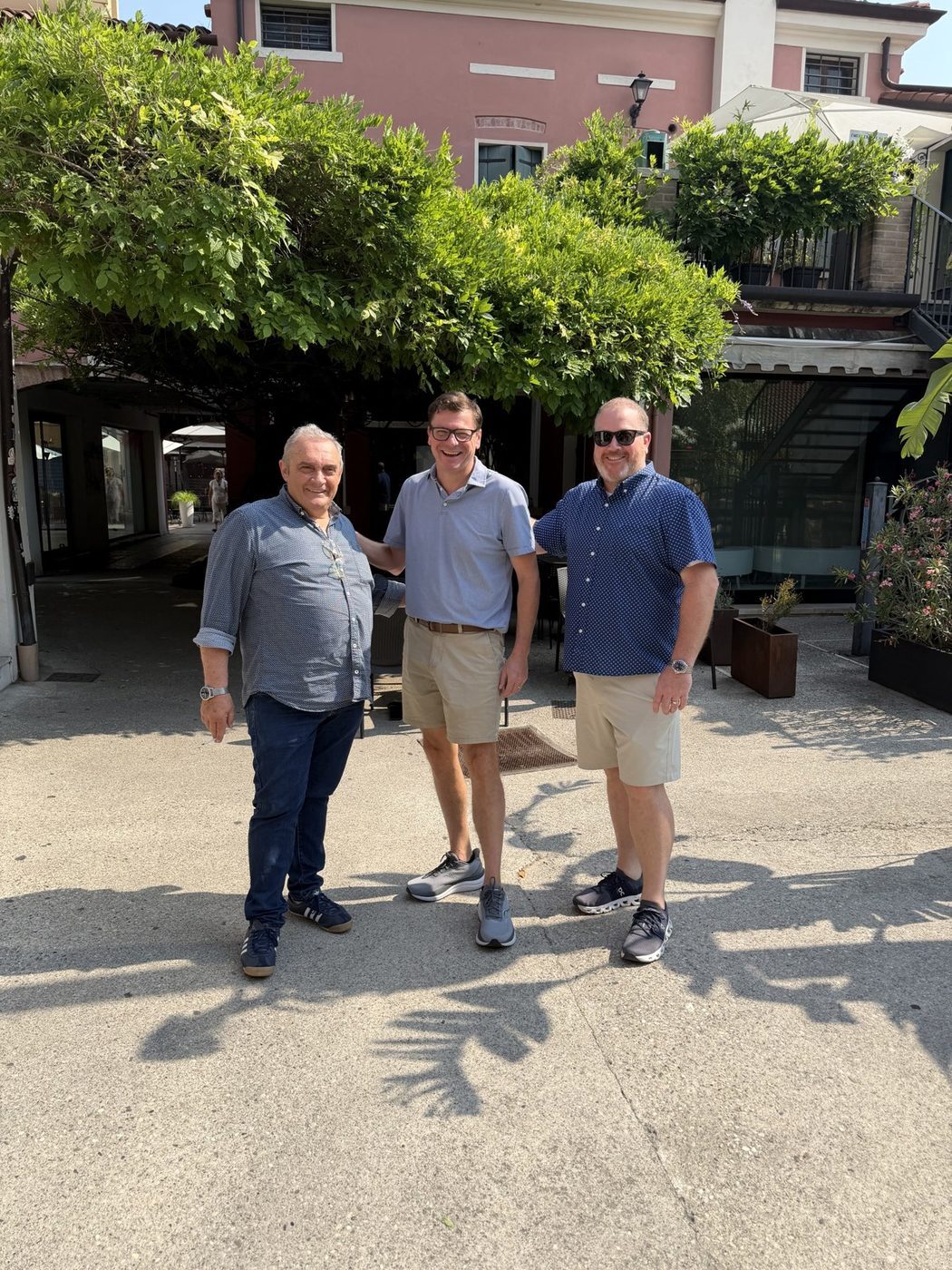
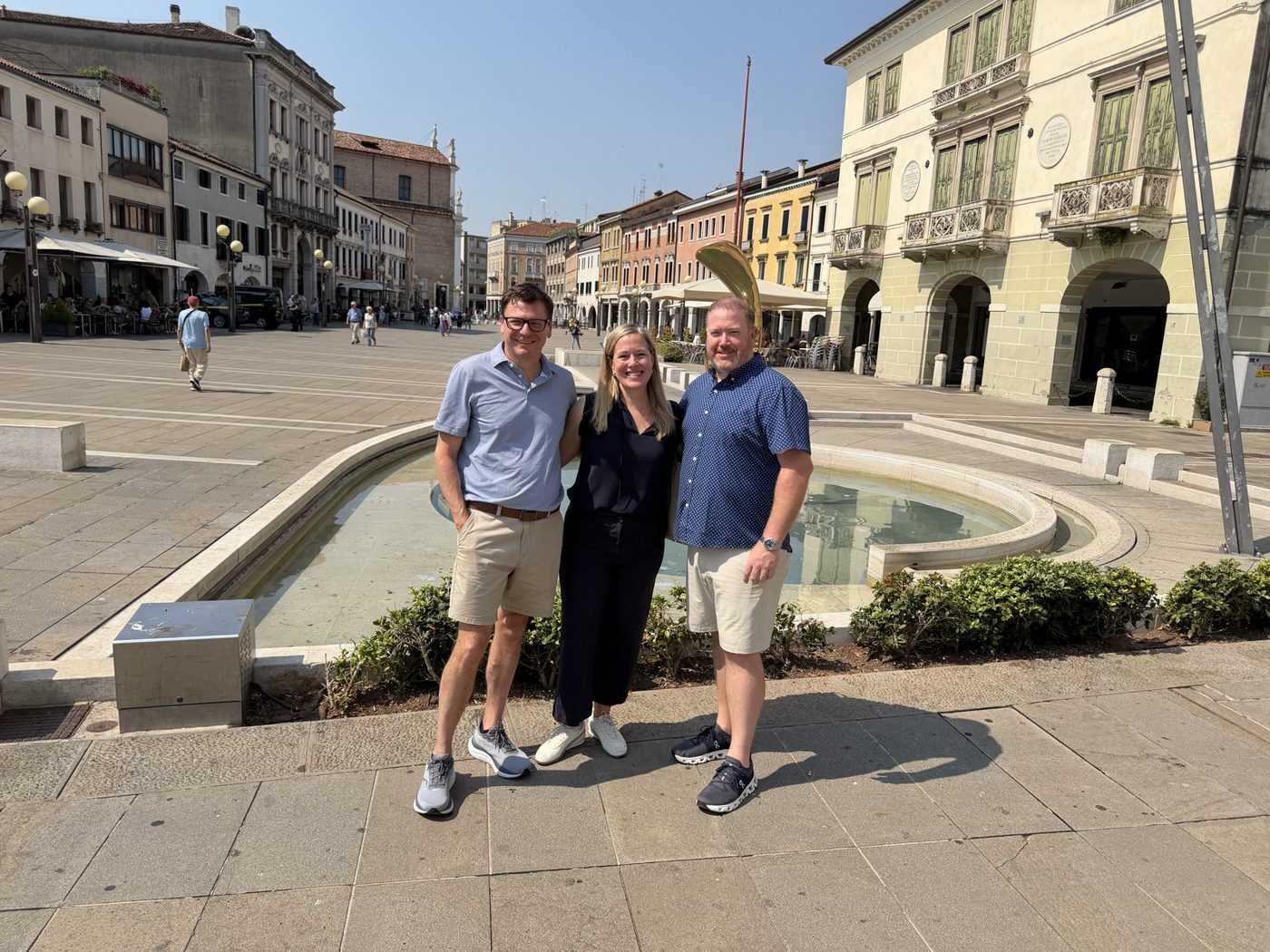
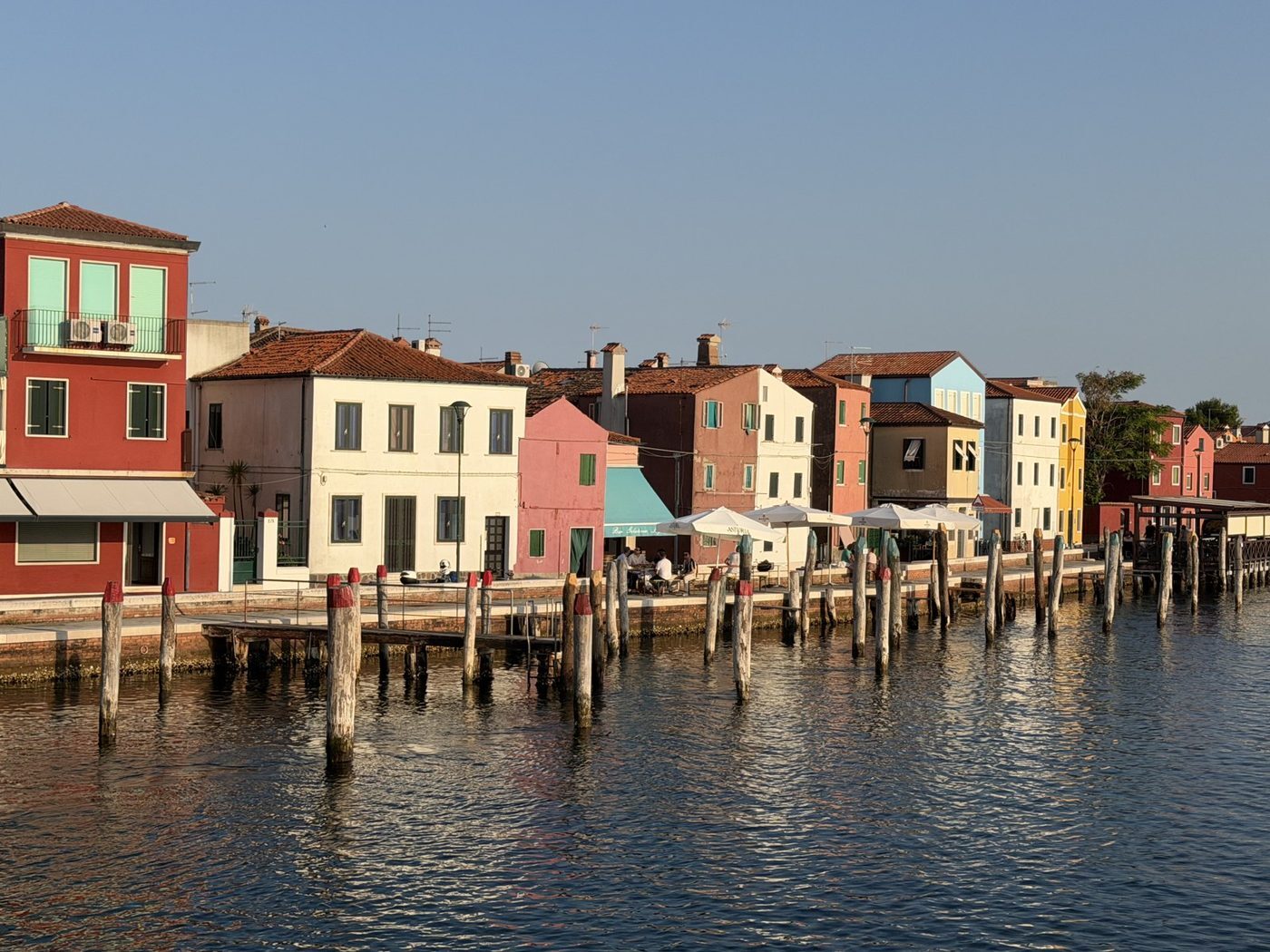
Somewhere in that same evening, walking through the square with Patrizio, he told us the story behind those colors — the ones you see on houses all through the Venice lagoon.
The way Patrizio told it: painters and artisans historically came into these lagoon towns by sea, and residents began painting their houses distinct colors so that fishermen coming home — sometimes in fog, sometimes late, sometimes after a long day on the water — could recognize their own home from a distance. A yellow house. A pink one. An orange one. The color became identity, a way to say this one is ours before you were even close enough to see the door.
I did some digging afterward, because I wanted to get this right before I told it to you as fact. This specific legend is most commonly and reliably told about Burano, the small lagoon island near Venice famous for its rainbow-colored houses — not the mainland town where we actually heard it, so Patrizio may have been drawing on that same well-known lagoon tradition rather than describing his own town’s history specifically.
Either way, it comes down to us as folklore more than documented record — historians describe several versions, and no single account is treated as definitive. The most common version matches almost exactly what Patrizio told us: fishermen needed a way to spot their homes from the water, especially in heavy fog, so houses were painted in bold, distinct colors as a kind of visual address. Other versions layer in family identity (distinguishing houses that shared a surname) or simple practicality (residents repainting with whatever pigment they could get their hands on, which is part of why the colors turned out so varied). Today, it’s no longer left to chance on Burano — the island’s council maintains an approved color palette, and homeowners need approval before repainting.
Whichever version is truest, I love what it says. These weren’t decorative choices made in a vacuum — they were functional, born out of a real need, and they became beautiful anyway. That’s Italy in a sentence, honestly.
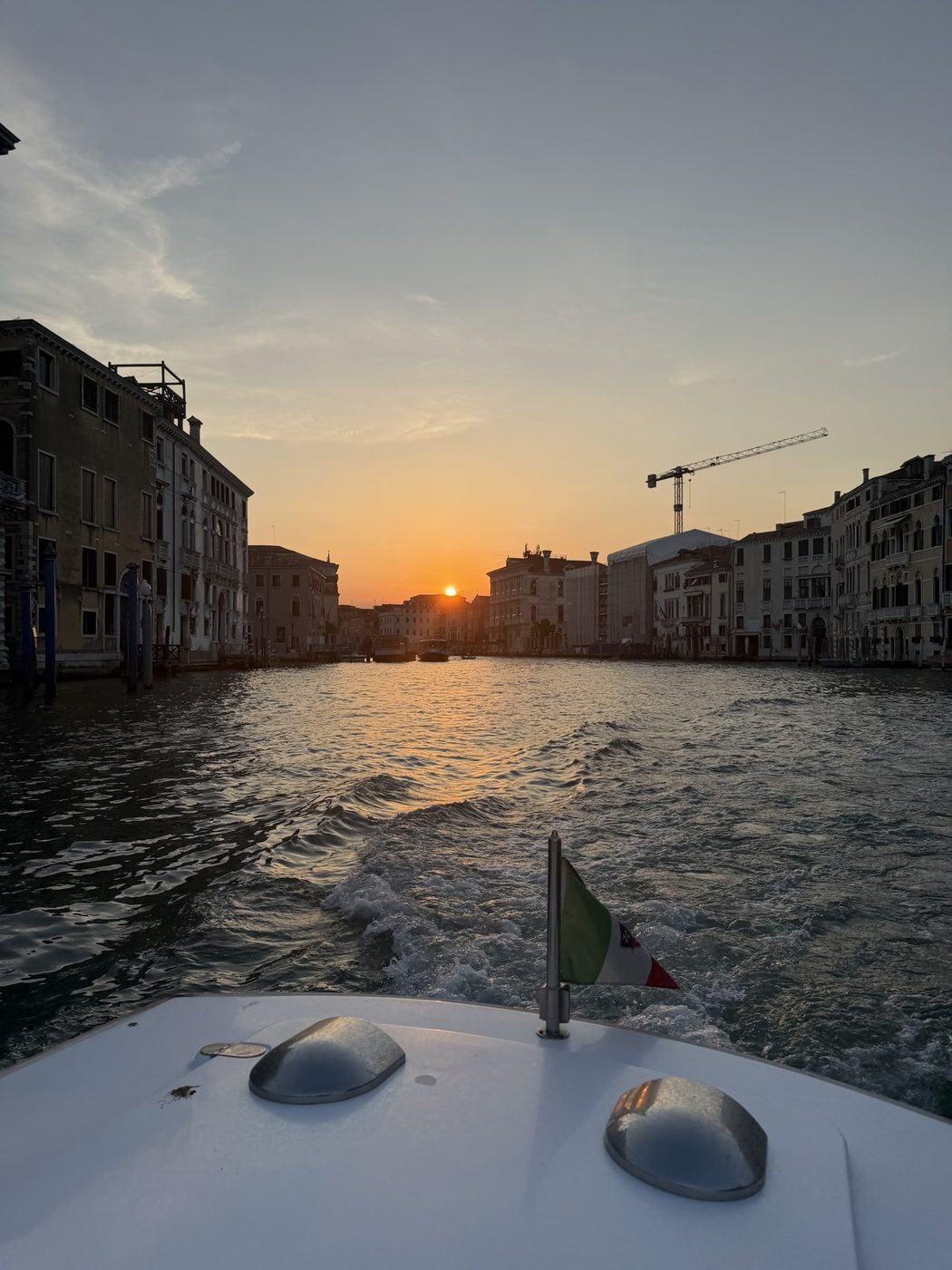
That night we went out on a boat and watched the sunset over the Grand Canal, and the sky ran through the exact same oranges, pinks, and reds as the houses we’d just walked past. I don’t think that’s a coincidence. I think it’s the whole point. Italians don’t just tolerate their landscape — they translate it. The colors of their homes are the colors of the water at dusk, because why would you invent a palette when the sky already handed you a perfect one?
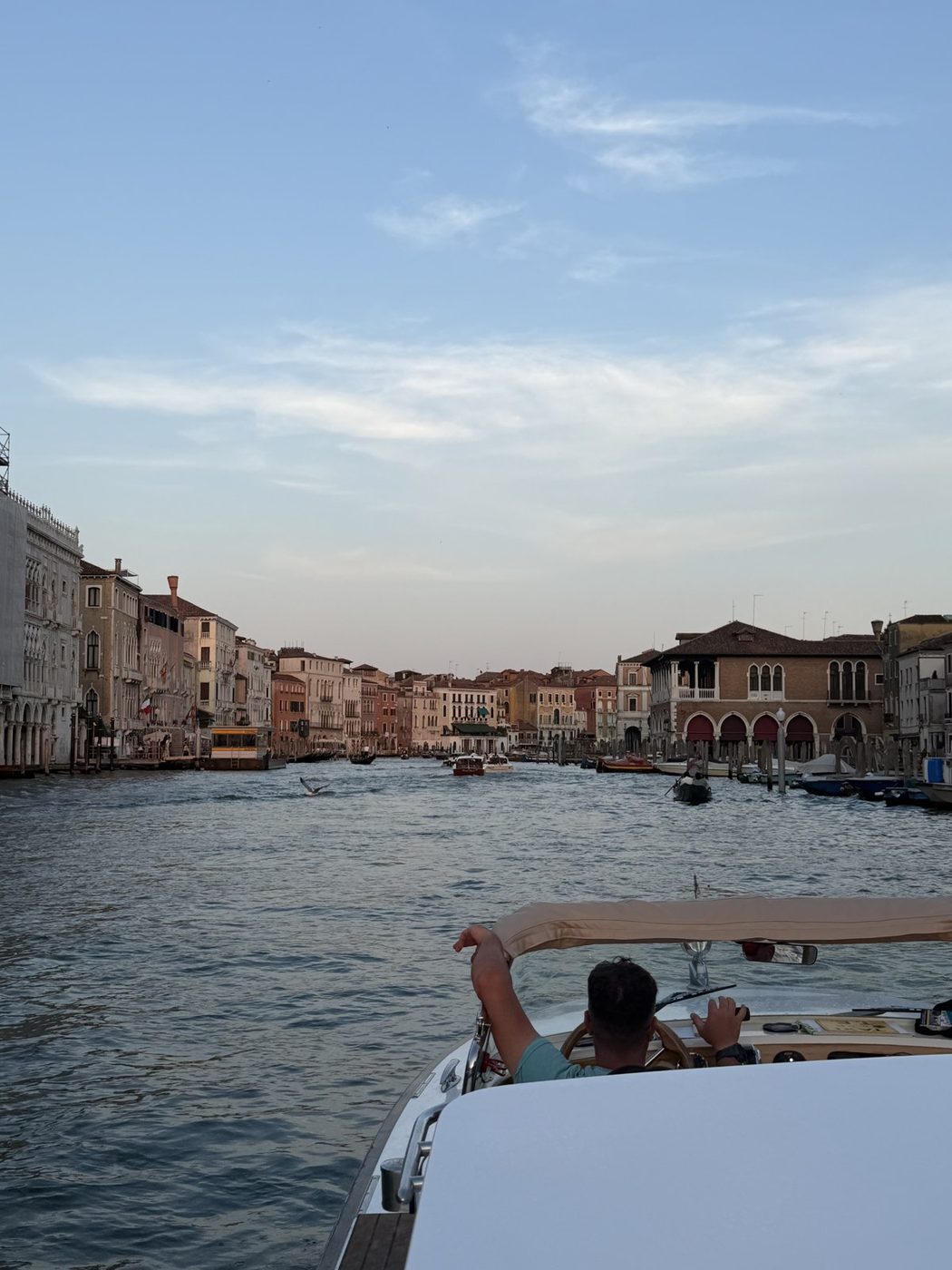
Why We Build What We Build: Italian Color, Limewash, and Craftsmanship
This is the part I keep coming back to. Italians are masters at noticing beauty and then making it permanent — in a wall, a fresco, a paint finish. They use what’s around them: the clay, the minerals, the dolomite beneath their own hills. When we say Romabio’s products are truly Italian, this is what we mean. It’s not a marketing line. It’s the ingredients, and it’s the eye — the one that looks at a sunset and thinks, I want my house to hold that color, too.
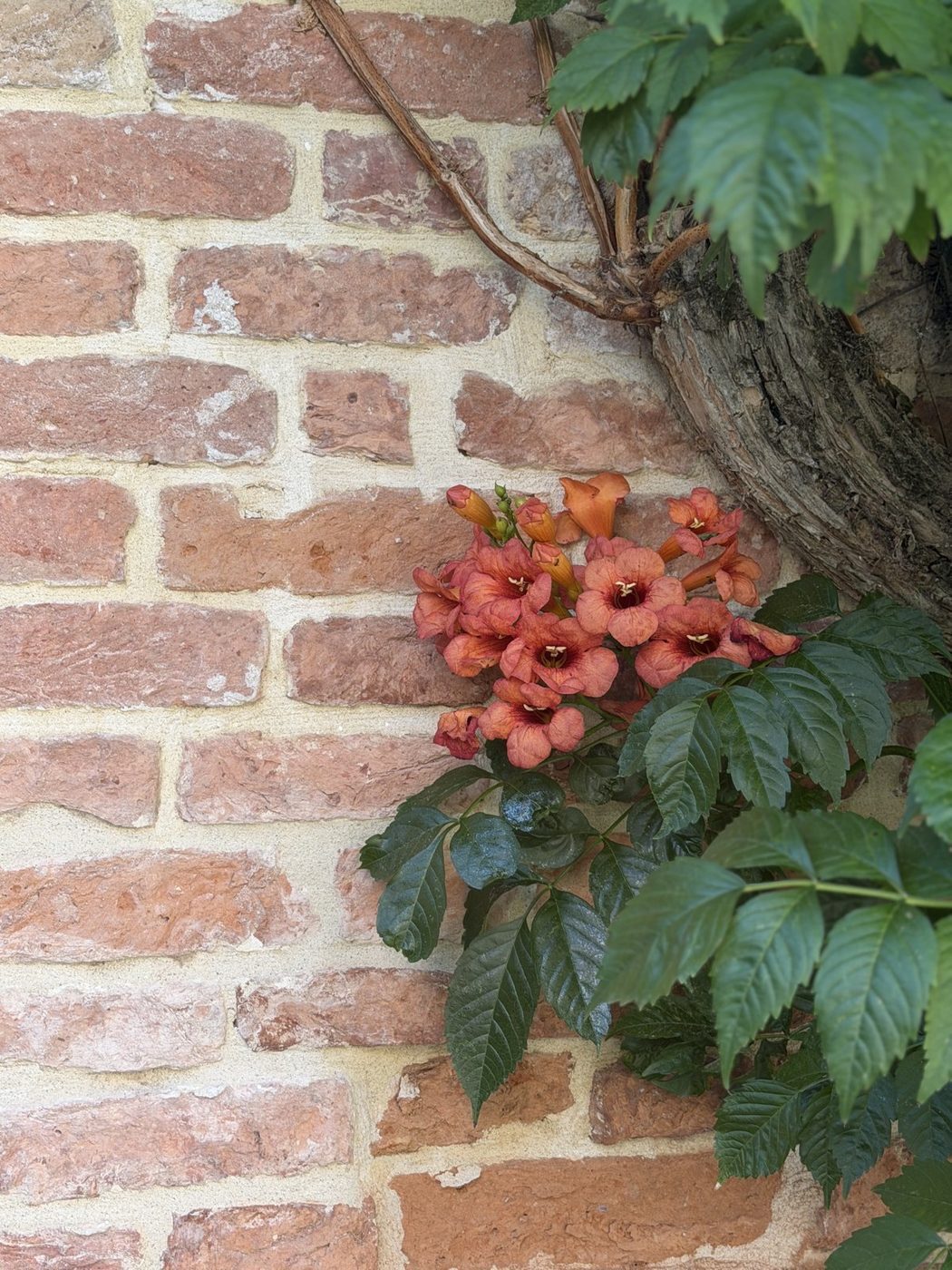
Every trip we take back there, Michael and I come home more convinced of why we do this. We’re not just formulating paint. We’re trying to bring a little bit of that instinct — beauty as something functional, not extra — home to people’s houses here.
Walking a City Built for Walking
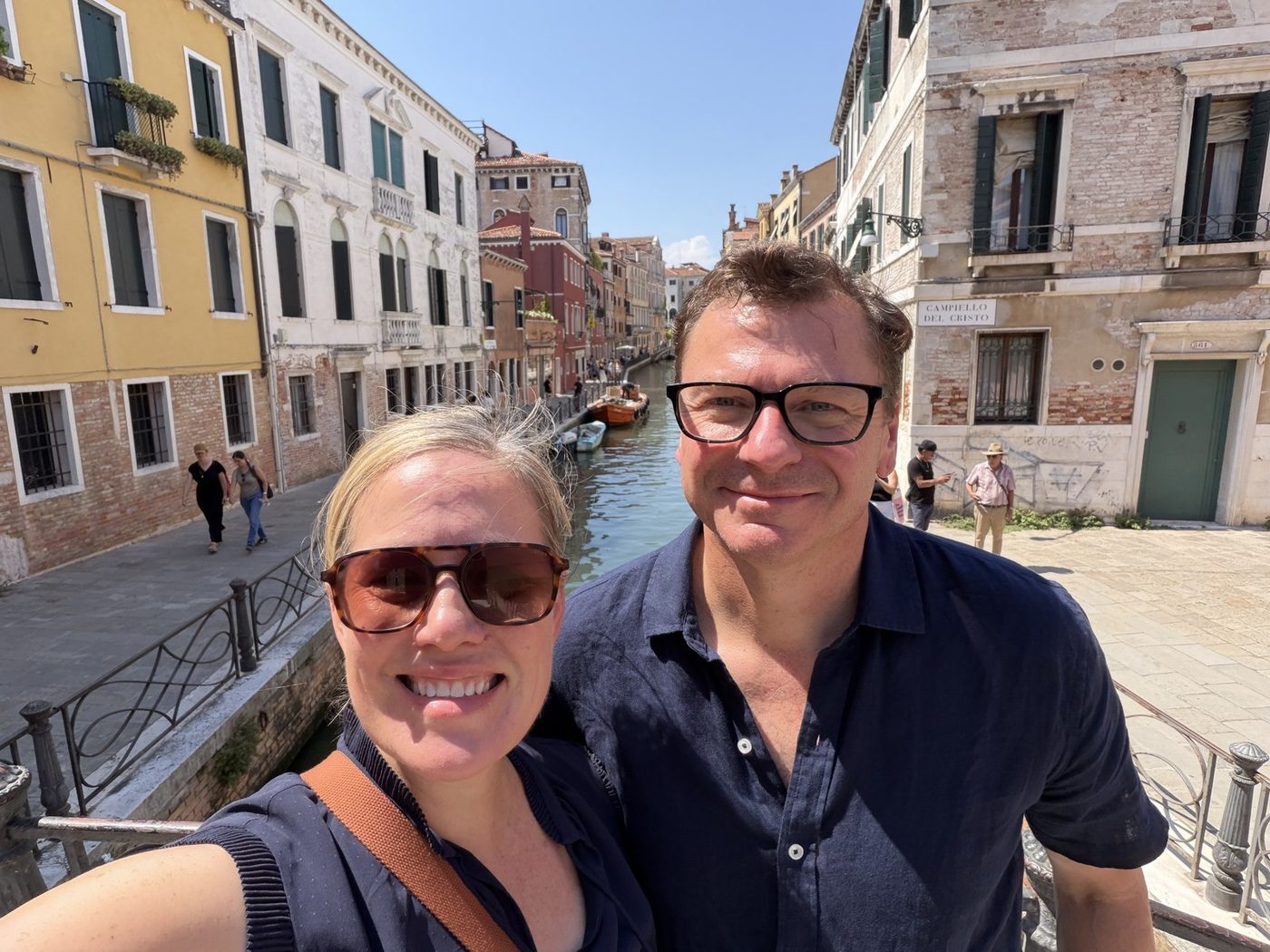
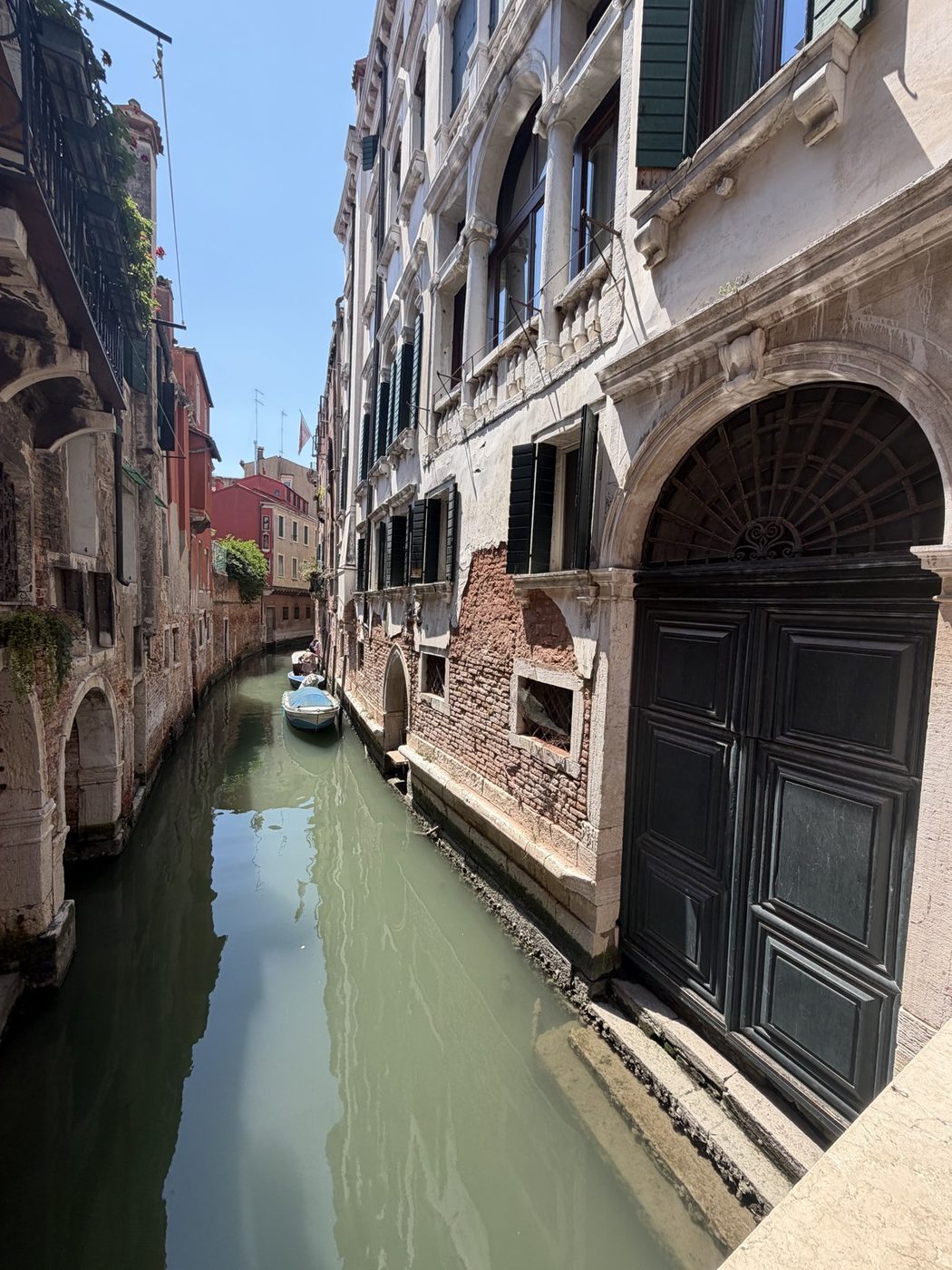
One thing I noticed more than anything this trip: Venice is a walking city, full stop. Not “walkable” the way an American downtown is walkable — genuinely built for feet, not cars, because there are no cars. Some of our older American cities (parts of Chicago, parts of New York) get close, but nothing quite matches it.
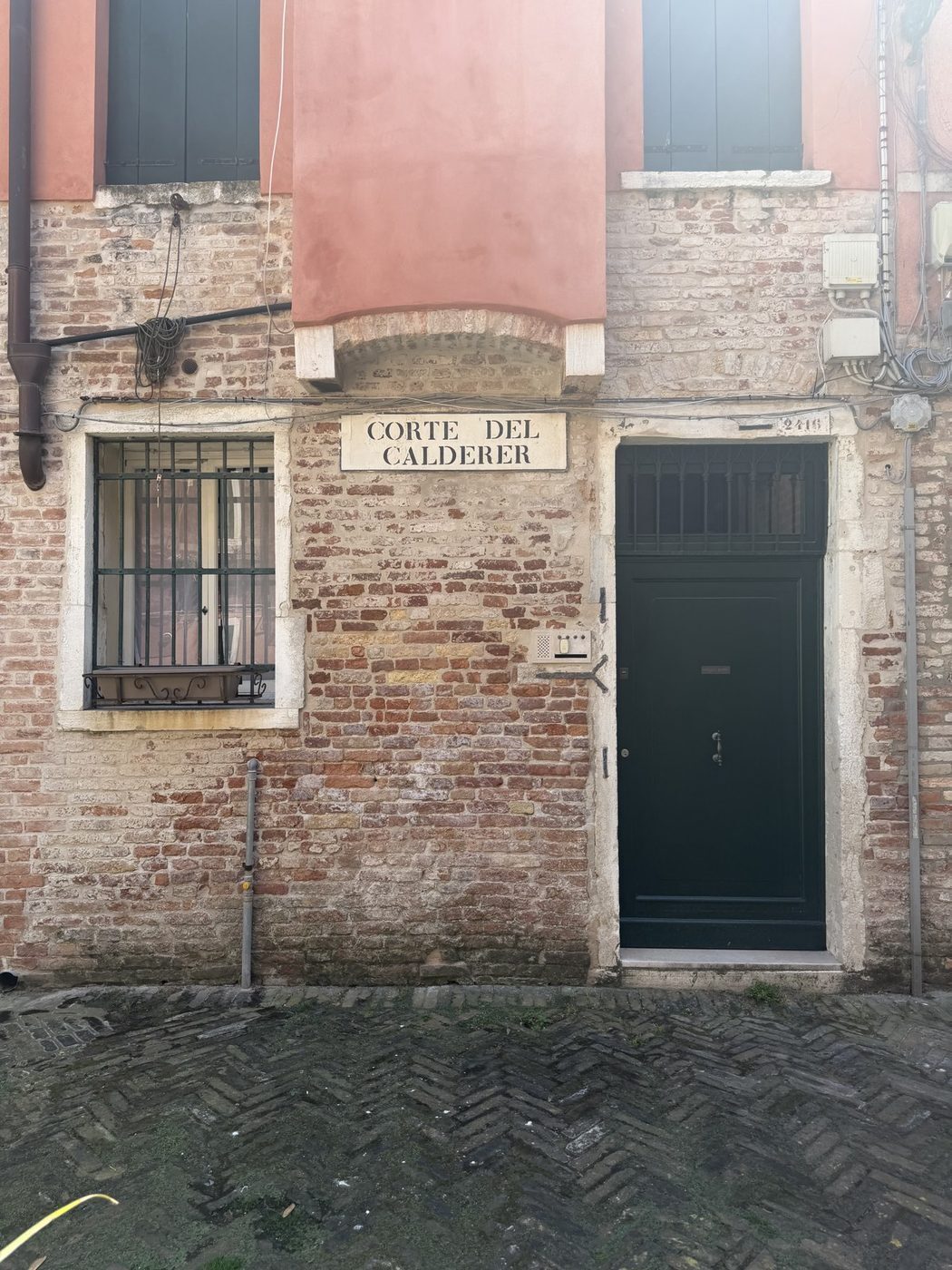
The Limewashed Wall That Stopped Me in My Tracks
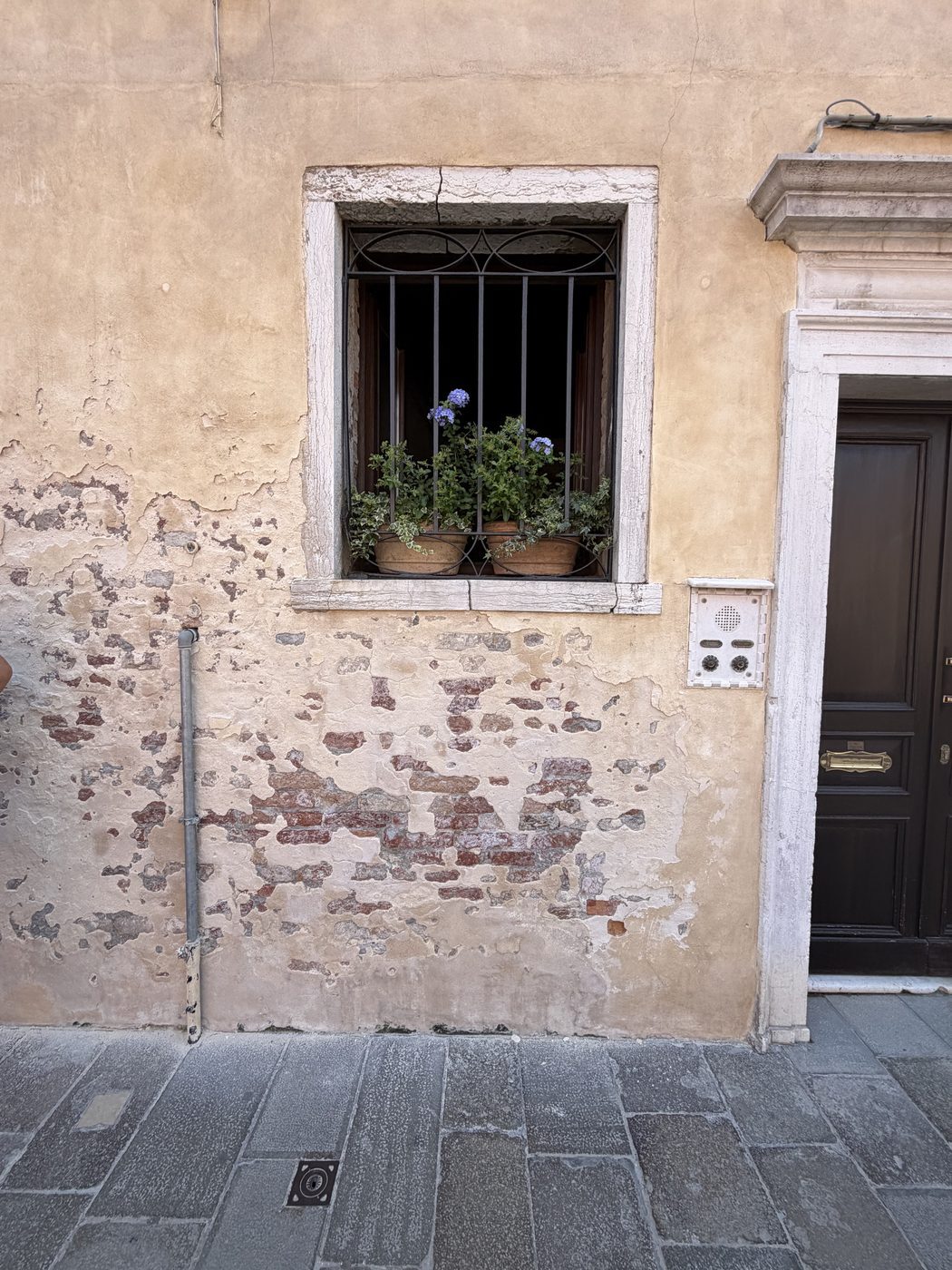
That’s how Michael and I found the wall that stopped me in my tracks — tucked into Corte del Calderer, a small courtyard in Venice’s San Polo district. We were just headed to grab lunch when I noticed an old building — worn brick underneath a lime wash that had faded and weathered over what must have been decades. It completely stopped me. That texture, that imperfection — it’s the exact look we’ve spent years trying to make achievable for people’s homes here, with products that can recreate that same aged, distressed lime-wash finish. Standing in front of the real thing, centuries old, made by nothing more than time and weather — that’s the kind of moment that sends me home more inspired than I know what to do with.

Coming Home
We ended the trip with our oldest daughter joining us in Venice for the weekend — hot as it was (June in Venice: also not recommended, if I’m being honest) — and it was the perfect way to close things out. Walking around after hearing Patrizio’s story, everything looked a little different. I kept noticing the why behind the beauty, not just the beauty itself.
That’s what this trip always does for us. We’ll be sharing more of what we brought home — new inspiration, new ideas, a few things we can’t wait to show you — soon.
Ciao for now, Leslie
 Finding Your Perfect Plaster Finish
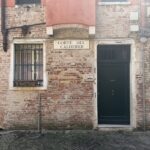
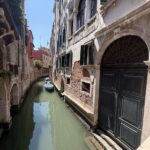

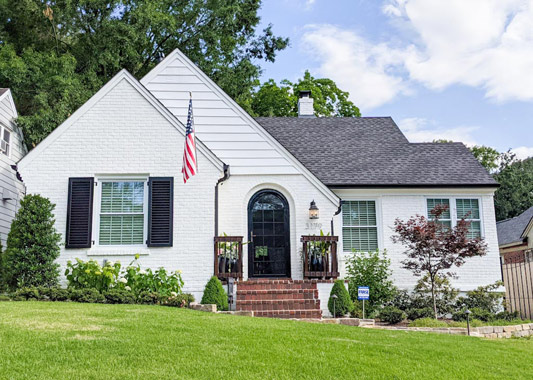 Photo Credit: Caldwell House, TN